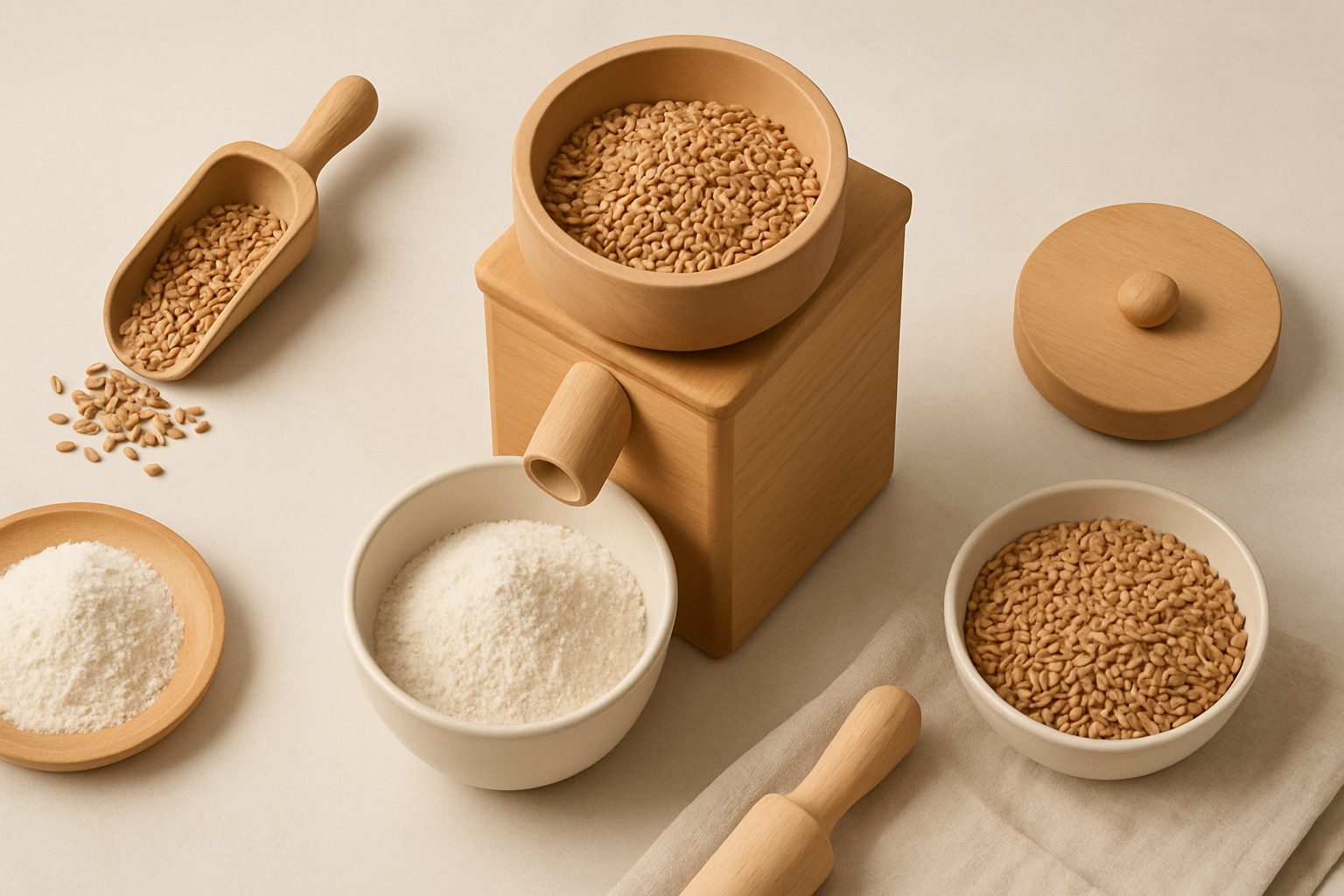
Best Home Grain Mills UK 2026: Top 8 Picks for Every Baker
If you bake seriously—or want to—milling your own grain changes everything. Freshly ground flour tastes distinctly better than shop-bought versions, keeps longer due to higher oil content, and gives you absolute control over coarseness and variety. But choosing between electric mills, manual options, and budget tiers is harder than it sounds.
This guide covers eight genuinely useful mills across price points and use cases. All are available in the UK or via trusted retailers, and we've focused on real capabilities rather than marketing claims.
Why Mill Your Own Grain?
Whole grains contain the germ and bran—where flavour, nutrients, and oils live. Commercial flour is milled weeks or months before you buy it, so the oils oxidise. Home-milled flour tastes fresher, and you can grind coarse (for texture) or fine (for smooth loaves). The trade-off: milling takes time and requires space.
The 8 Best Mills
1. Komo Fidibus (Electric, Premium) The gold standard for serious home bakers. The Komo grinds both grains and seeds, handles batch sizes from 100g to 3kg, and delivers consistent flour in under five minutes. The Widia stone burrs are German-quality, running cool to preserve nutrition. It's compact but costs around £400–£450. Best for: anyone milling weekly and unwilling to compromise on speed or texture.
2. Hawos Novum (Electric, Mid-Range) A respected German mill at a friendlier price (£250–£300). Quieter than some electric mills, handles 0.5–2kg batches, and stone burrs adjust from coarse to very fine. It's slower than the Komo but reliable. Downside: spare parts can take weeks to import. Best for: regular bakers on a moderate budget who value quieter operation.
3. Country Living Stone Grain Mill (Manual, Budget-Friendly) A tabletop cast-iron beauty that costs £80–£110 and requires no electricity. Grinding by hand takes about 15 minutes per kilo, which is meditative or tedious depending on your perspective. It's surprisingly effective for small batches and works beautifully for spelt, oats, and harder wheats. Downside: grip strength matters, and coarse flour requires extra passes. Best for: small-batch bakers, hobby millers, or anyone wanting gadget-free milling.
4. Ankarsrum Original (Multipurpose, Mid-Range) Swedish food processor (£250–£280) that includes a grain-milling attachment. It's not a dedicated mill, but it handles most grains competently and saves kitchen space if you already use a food processor. Slower than standalone electric mills; flour texture is adequate rather than perfect. Best for: space-conscious bakers or those wanting one machine for multiple tasks.
5. KitchenAid Grain Mill Attachment (Electric, Compact) If you already own a KitchenAid stand mixer (or are buying one anyway), the grain mill attachment (around £150–£180) turns it into a functional home mill. Fast, compact, stone burrs. Limitation: batch size is smaller, and you'll need the mixer running, which takes counter space during milling. Best for: existing KitchenAid owners who want integrated milling without a separate machine.
6. Back to Basics Grain Mill (Manual, Budget) Cast iron, hand-crank operation, costs £60–£90. Simpler mechanism than pricier manuals; grind quality is rougher, and you'll want two people for sustained milling of large batches. Works best for softer grains like oats and rye. Best for: very occasional millers on tight budgets.
7. Philips HR7775 Whole Fruit Juicer with Grain Function (Electric, Budget-Crossover) Not a dedicated mill, but Philips' high-speed blender can grind soft grains and legumes into flour-like consistency. Around £100–£120. Produces heat (potentially affecting nutrition), and you're not milling whole grains efficiently—better for lentils, chickpeas, or already-softer grains. Best for: budget-conscious bakers milling chickpea or legume flours occasionally.
8. Hawos Billy (Manual, Premium) The luxury hand mill at £180–£220. Large flywheel, smooth grinding action, beautifully engineered German cast iron. Milling 1kg takes about 12 minutes with less effort than cheaper manuals. Best for: those who prefer manual mills and value engineering quality enough to justify the premium over basic cast-iron options.
Quick Comparison
| Mill | Type | Price | Batch Size | Speed | Best For | |------|------|-------|-----------|-------|----------| | Komo Fidibus | Electric | £400–£450 | 100g–3kg | Very fast | Serious, frequent bakers | | Hawos Novum | Electric | £250–£300 | 500g–2kg | Fast | Regular bakers, quiet priority | | Country Living | Manual | £80–£110 | 500g–2kg | Medium | Small-batch, hobby millers | | Ankarsrum | Multipurpose | £250–£280 | 300g–1kg | Medium | Space-conscious bakers | | KitchenAid Attachment | Electric | £150–£180 | 200g–800g | Fast | Existing mixer owners | | Back to Basics | Manual | £60–£90 | 500g–1.5kg | Slow | Occasional, very budget-conscious | | Philips Blender | Electric | £100–£120 | 100g–500g | Very fast | Legume/soft-grain flours | | Hawos Billy | Manual | £180–£220 | 500g–2kg | Medium | Manual mill enthusiasts |
Honest Takeaway
For most UK home bakers milling weekly, an electric mill at the Hawos Novum or Komo Fidibus level justifies the expense; flour quality and time savings outweigh cost. If you're occasional, a manual mill costing under £120 is sensible—no electricity, no noise, and genuinely functional despite slower grinding. Multipurpose machines are compromises: useful if space matters more than dedicated performance.
The best mill is the one you'll actually use. Speed-conscious bakers regret cheap manuals; space-conscious bakers regret bulky electrics gathering dust.
More options
- KoMo Electric Grain Mills (Amazon UK)
- Mockmill Stone Grain Mills (Amazon UK)
- NutriMill Harvest Grain Mill (Amazon UK)
- Manual Hand Grain Mills (Amazon UK)
- Wheat Berries & Milling Grains (Amazon UK)