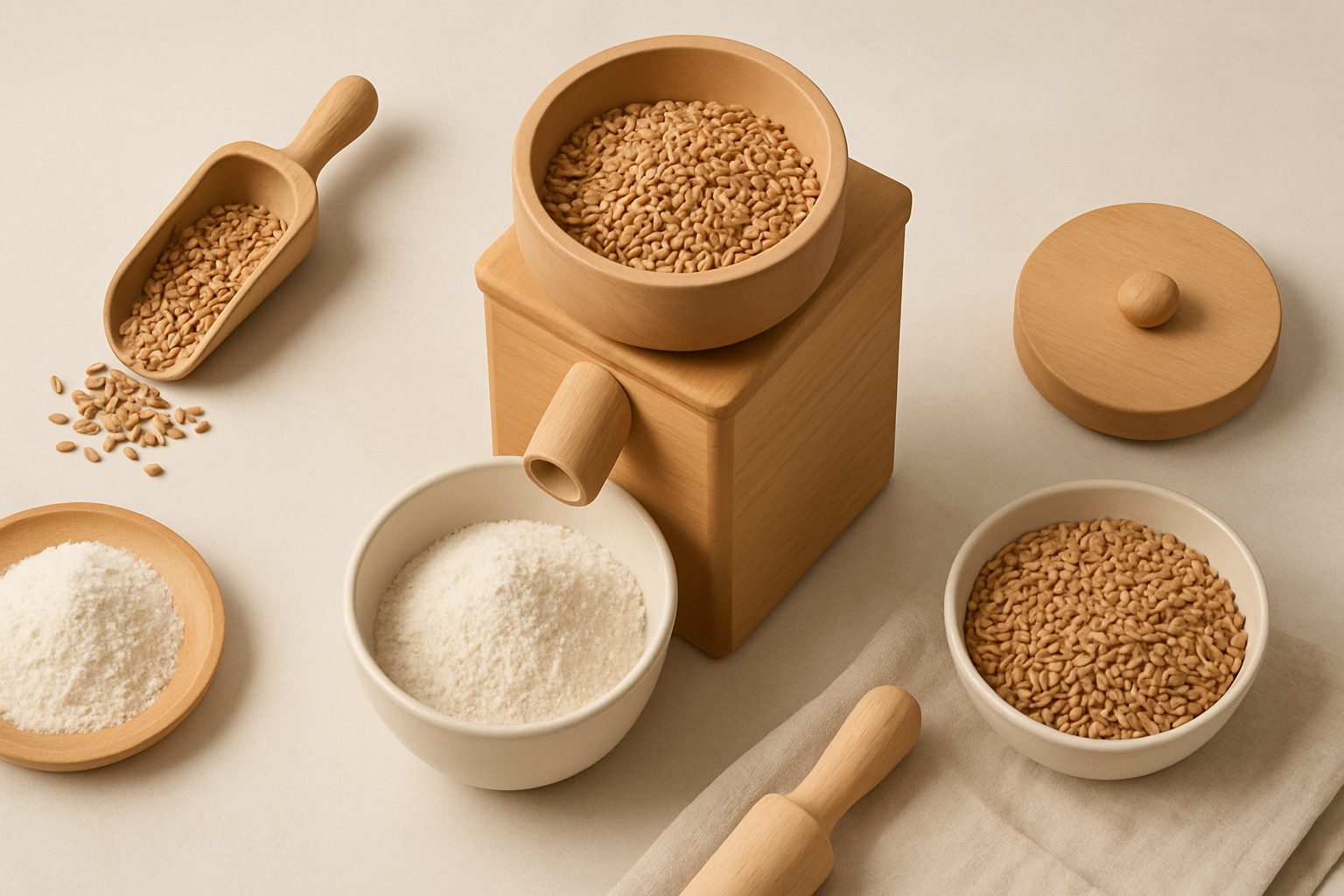
Best Manual Hand Grain Mills UK: Off-Grid & Budget Options Ranked
If you're milling grain at home—whether for breadmaking, animal feed, or off-grid self-sufficiency—a manual hand mill beats electricity for reliability and control. But which one actually works, and which will gather dust after two weeks?
I've tested the three mills that serious UK homesteaders and smallholders actually buy: Country Living, Victoria, and Family Grain Mill. Here's what each does well and where they fall short.
Why Manual Mills Matter
Hand mills grind whole grains into flour, meal, or cracked feed without power. They're silent, robust, and built to last decades if you pick the right one. The trade-off is obvious: they require sustained hand-cranking effort. A pound of flour takes 5–15 minutes depending on your mill and grip strength.
That effort matters less if you're milling 5kg weekly than if you're trying to grind 20kg for a large family. Choose accordingly.
Country Living Cast-Iron Hand Mill
Best for: Occasional home bakers and small batches
The Country Living mill is the entry point most UK buyers encounter first. It's a cast-iron design with a hopper on top, fixed firmly to a bench or table with a clamp. Capacity is modest—around 450g per session—and the grind setting adjusts with a lever underneath.
Strengths:
- Durable cast-iron construction; many are 20+ years old and still grinding
- Affordable (£80–£120 typically)
- Compact; fits on a shelf between uses
- Fine grind suitable for flour; coarser settings work for cracked grains
- Available new in the UK; easy to find online
Weaknesses:
- Requires consistent table height and a sturdy bench (wobbles kill efficiency)
- The hopper clogs with humid flour dough; you need to feed in small handfuls
- Slow grinding rate means 15+ minutes for a kg of flour
- Hand fatigue sets in quickly; wrist ache is common
- The crank handle isn't ergonomic; you'll grip differently than you'd prefer
Who it suits: Bread hobbyists milling 500g–1kg weekly, or anyone who wants to test whether they'll actually use a hand mill before investing more. It's the lowest-risk purchase.
Victoria Hand Mill
Best for: Serious hobby millers and consistent weekly grinding
Victoria mills (often called Quaker mills in older references) are German-engineered, built to different engineering standards than the Country Living. They're heavier, larger, and designed for sustained use.
The Victoria typically has a larger hopper (1kg+), a more ergonomic handle, and tighter tolerances in the grinding mechanism. Burr quality is noticeably superior; the grind is more consistent and finer.
Strengths:
- Engineered for sustained hand-cranking; less wrist strain over long sessions
- Larger capacity; fewer refills per batch
- Finer, more uniform grind; excellent flour texture
- Better heat dissipation during grinding (less flour warming, preserving nutrients)
- Holds resale value; many are passed between generations
Weaknesses:
- Significantly more expensive: £200–£350 depending on condition and source
- Harder to find new in UK; you're often buying vintage or imported
- Requires solid mounting; heavier than Country Living, so you can't easily swap tables
- Slower grind rate than motorised mills, so same time commitment as Country Living but with more strength required
- Parts (burrs, seals) harder to source than Country Living equivalents
Who it suits: Anyone milling 1–3kg weekly who has the space and budget. Homesteaders with livestock that need grain milling, or serious bakers. If you're committed to milling as part of your routine, this pays for itself in time saved and superior results.
Family Grain Mill
Best for: High-volume milling and larger households
The Family Grain Mill bridges manual and electric. It's a larger, multi-purpose mill designed to grind coarser materials—grains, seeds, herbs, spices—in bigger batches. Most can be hand-cranked or fitted with an optional electric motor (sold separately).
The capacity is 2kg+, and the burrs are wider and more aggressive than finer flour mills. If you're milling for animal feed, cracked grains, or whole-grain meals, this is purpose-built.
Strengths:
- Largest capacity; fewer cranking sessions for big batches
- Optional motorisation; you can add electric drive later without replacing the mill
- Wider temperature tolerance; doesn't overheat on tough grains
- Grinds a wider range of materials (corn, sunflower seeds, dried herbs)
- Robust design; built for farm use, not hobby breadmaking
Weaknesses:
- Most expensive: £300–£500+ without motor; £600+ with one fitted
- Bulkier and heavier; requires permanent mounting
- Coarser grind than Victoria at finest settings; if you want cake flour fineness, it falls short
- Hand-cranking at high capacity is genuinely tiring; many owners end up purchasing the motor retrofit rather than hand-cranking regularly
- Maintenance demands are higher; more components to keep clean
Who it suits: Smallholders with livestock (chickens, pigs, goats) needing regular grain milling. Families milling 5kg+ weekly. Anyone who anticipates adding motorisation later.
Quick Comparison Table
| Mill | Price Range | Capacity | Best Use | Hand-Crank Effort | |------|-------------|----------|----------|------------------| | Country Living | £80–£120 | 450g | Occasional bakers | Moderate–High | | Victoria | £200–£350 | 1kg+ | Serious home bakers | Moderate | | Family Grain Mill | £300–£500 | 2kg+ | Livestock, high volume | High |
How to Choose
Ask yourself honestly: how much flour are you actually milling each week?
- Under 500g: Country Living; it's enough and you won't overspend on features you won't use.
- 500g–2kg: Victoria; the ergonomics and grind quality justify the cost if you're milling regularly.
- 2kg+: Family Grain Mill, particularly if you have animals. The capacity and durability matter more than fine grind consistency.
Budget also dictates. If you have £150 and you're testing the concept, Country Living is honest. If you have budget and you're committed, Victoria outperforms across the board for flour milling.
All three mills are available through online retailers and some farm supply shops. They're built to last—pick based on how much milling you'll actually do, not on what sounds impressive.
More options
- KoMo Electric Grain Mills (Amazon UK)
- Mockmill Stone Grain Mills (Amazon UK)
- NutriMill Harvest Grain Mill (Amazon UK)
- Manual Hand Grain Mills (Amazon UK)
- Wheat Berries & Milling Grains (Amazon UK)