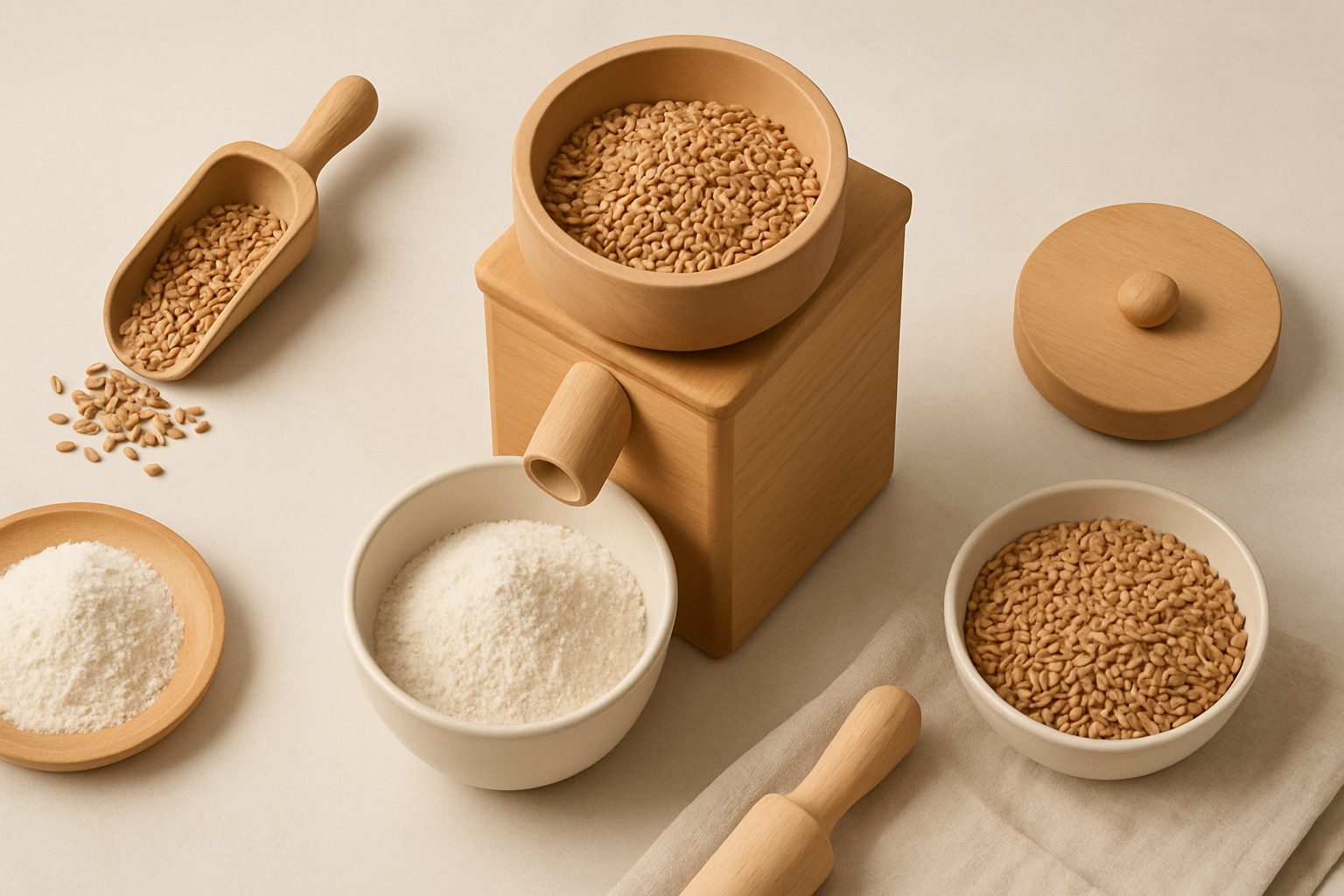
Best Wheat Berries to Buy in the UK: Hard, Soft & Ancient Grains
If you've just bought a home grain mill, choosing the right wheat berries makes the difference between flour that performs beautifully and grain that disappoints. Not all wheat is equal—some varieties mill smoothly, others are harder to crack, and some produce flour with entirely different baking characteristics. Here's what you actually need to know when buying wheat berries in the UK.
Hard Red Wheat vs Soft Wheat: The Fundamental Difference
Hard red wheat has higher protein content (typically 12–15%) and harder endosperm, making it ideal for bread baking. It mills to a flour with strong gluten development, which means better rise, chew, and structure in loaves. If you're primarily interested in bread, this is your baseline choice. The "hardness" does mean your mill needs decent torque—softer mills might struggle, though most domestic burr mills manage fine.
Soft wheat is lower protein (9–11%) and mills more easily into a tender flour. This flour performs well in cakes, pastries, and biscuits where you want delicacy rather than elasticity. It's genuinely easier on smaller mills because the grain breaks down with less resistance.
Ancient grains like spelt and einkorn occupy a middle ground. They're harder than modern soft wheat but often mill differently—some mills report slightly more grain dust or slower throughput, though this varies by mill design. The real trade-off is flavour: ancient grains have distinct, nuttier tastes that modern wheats don't.
Key Suppliers in the UK
Hodmedod's (Norfolk-based) specialise in British-grown organic grains and pulse crops. Their hard red wheat is milled-tested (they actually know how it performs in home mills) and available in 1 kg and 5 kg bags. Expect to pay around £3–4 per kg. Their spelt is consistently recommended in home-milling forums, though some users note it produces slightly more chaff than you might expect—this isn't a fault, it's just how that variety behaves. Delivery is reliable within 5–7 working days.
Shipton Mill (Gloucestershire) have been milling flour commercially for decades, and they stock wheats specifically for home millers. Their range includes hard red, soft wheat, and heritage varieties. Prices sit at £2.50–3.50 per kg depending on volume. The quality is reliable but less explicitly "home-mill focused" in their marketing—it's worth ringing ahead if you're unsure whether a particular product suits your mill.
Doves Farm stock organic wheat berries through larger supermarkets and online. Generally available at £4–5 per kg. The consistency is good, though prices reflect the mainstream organic premium rather than direct-from-farm pricing.
Local farm shops in cereal-growing regions (East Anglia, Midlands) sometimes sell directly milled or in-shell grain at lower prices. Quality is variable—some are excellent, others have moisture or storage issues. Always ask about storage conditions and moisture content if you're buying locally.
What to Actually Look For
Moisture content matters more than most buyers realise. Grain milled fresh usually sits at 10–12% moisture. If it's been stored damp or in humid conditions, it can spike to 14–16%, which causes clogging in burr mills and slower throughput. Reputable suppliers list this—if they don't, ask before buying in bulk.
Test with a small batch first. Buy 1 kg and run it through your mill before committing to 5 kg. How loud is your mill? How long does it take? Does the flour come out fine or gritty? This tells you whether a particular grain suits your equipment.
Organic vs conventional affects price more than milling performance. Organic wheats are typically pesticide-free but aren't inherently easier to mill—they just cost 30–50% more. If budget is tight, conventional hard red wheat from Hodmedod's or Shipton Mill performs identically in the mill.
Ancient Grains: Honest Trade-Offs
Spelt has a thinner husk that separates during milling, producing noticeably more chaff. Some mills handle this better than others. The flour has a warm, slightly sweet flavour that genuine spelt bread enthusiasts love, but it's not for everyone. Expect 10–15% lower extraction (more waste) compared to modern wheat.
Einkorn is genuinely difficult in standard burr mills because the grain is smaller and the husk is tougher relative to the kernel. If your mill has a fine adjustment, it can work, but coarse mills often produce inconsistent flour. The flavour is excellent—complex and slightly earthy—but only pursue this if your mill is adjustable and you enjoy troubleshooting. Prices are also higher: £6–8 per kg.
Storage and Freshness
Whole wheat berries stored cool and dry (below 15°C, ideally with desiccant packs) last 6–12 months without issue. Once milled into flour, that window drops to 2–4 weeks before rancidity becomes noticeable. This is the genuine advantage of home milling—flour milled to order is fresher than anything commercial, no matter the quality.
Start Simple
New home millers almost always do best with hard red wheat first. It's forgiving, mills smoothly on most equipment, and produces reliable bread flour. Hodmedod's or Shipton Mill are your easiest wins. Once you're comfortable with the process and know your mill's limits, branch into soft wheat or ancient grains. You'll appreciate the differences more when you have a baseline to compare against.
More options
- KoMo Electric Grain Mills (Amazon UK)
- Mockmill Stone Grain Mills (Amazon UK)
- NutriMill Harvest Grain Mill (Amazon UK)
- Manual Hand Grain Mills (Amazon UK)
- Wheat Berries & Milling Grains (Amazon UK)