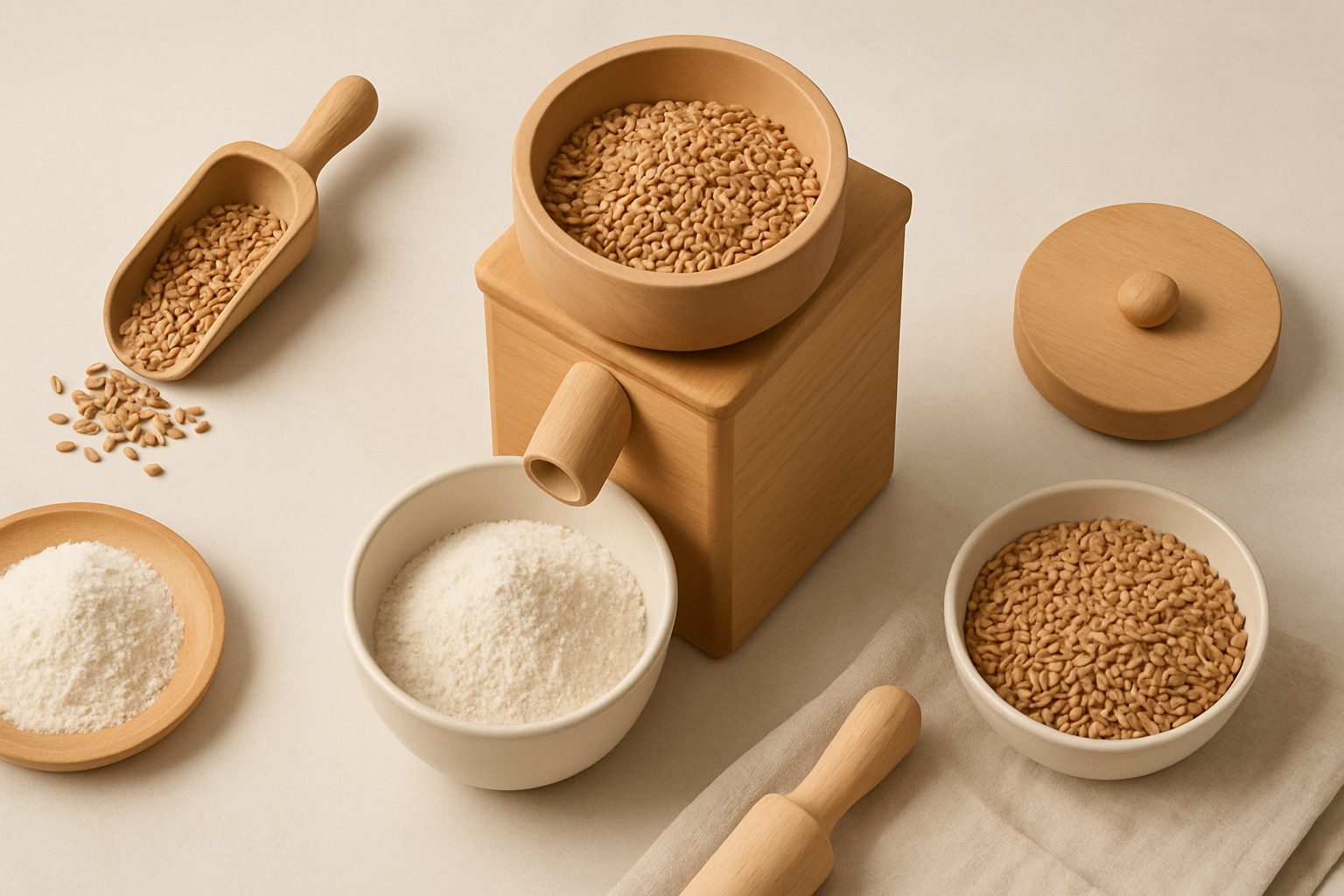
KoMo vs Mockmill: Which Stone Burr Mill Wins for UK Bakers?
If you're serious about home bread-making or milling your own flour, you've probably narrowed it down to KoMo or Mockmill. Both brands sit at the premium end of the market, both use stone burrs, and both have loyal followings in the UK sourdough community. But they're built very differently, grind differently, and cost differently. Here's what actually matters when you're spending £600–£1,500.
The Core Difference: Motor Size and Purpose
This is the biggest thing to understand. KoMo mills—particularly the Comet and Tornado—were designed as small-scale commercial mills that home bakers adopted. They're built like appliances you'd find in a professional kitchen.
Mockmill mills are genuinely designed for home use. The motor is smaller, the footprint is tighter, and they're engineered for the 2–5 kg milling sessions most home bakers actually do.
This difference cascades into everything else.
Grinding Capacity and Speed
KoMo Comets and Tornados can grind 100+ kg of grain per hour under continuous operation. Your home kitchen doesn't need this. A Mockmill 200 grinds around 50–70 kg/hour, which is more than enough for weekly milling.
In real terms: milling 2 kg of spelt wheat takes KoMo about 2–3 minutes; Mockmill about 4–5 minutes. If you're milling weekly, not daily, you won't notice the difference.
However, KoMo's higher motor power means less strain during extended sessions. If you regularly mill 10+ kg at a time, KoMo feels more effortless.
Flour Fineness: Where Both Excel
Both mills produce genuinely fine flour suitable for bread-making. Stone burr mills create flour around 200–300 microns on average, which is fine enough for nearly all bread and cake recipes.
KoMo mills are often cited as slightly finer because the burr pressure can be adjusted more aggressively, but the practical difference is minimal. A loaf made with flour from either mill will taste virtually identical. The real test isn't lab measurements—it's open crumb structure and gluten development, which depend more on hydration, fermentation, and technique than on whether your flour is 250 or 280 microns.
Noise: KoMo's Achilles' Heel
This is where Mockmill genuinely wins.
KoMo Comets operate at 85–90 decibels. That's loud. Sustained. It's conversation-stopping, and if you mill at 7 a.m., your household will know about it.
Mockmill mills run at 75–80 decibels. Still audible, but significantly quieter. Some users report the Mockmill 200 as merely "noisy" rather than "that bloody thing again."
If noise matters to you—and in a British semi-detached home, it probably does—Mockmill is the better choice.
Build Quality and Durability
KoMo mills come from a company with 30+ years in the milling business. They use hardened steel and cast iron, and they're designed to handle serious use. Parts are available individually, and the mills are simple enough that a competent person can service them.
Mockmill mills are newer (the company has been around since the early 2010s) and use more electronics. The burr assembly is excellent, but the machine feels slightly more "fitted together" rather than "built to last 50 years." That said, plenty of Mockmill owners have run theirs daily for 5+ years without issues.
For UK bakers: if you're milling 2–3 times a week, either will last you a decade. If you're milling daily, KoMo's slightly more robust build provides more confidence.
Price and Value for Money
KoMo mills in the UK: £800–£1,200, depending on the model and where you buy.
Mockmill mills: £600–£900.
You're paying extra for KoMo's industrial heritage and grain-hopper capacity. You're getting more overspec than you need. Mockmill offers better value if you want 90% of the functionality for 70% of the cost.
Electricity and Footprint
KoMo mills draw 800–1,000 watts under load. Mockmill mills draw 500–700 watts. Both are fine on a standard UK 13-amp socket, but Mockmill's lower power draw is gentler on ageing kitchen electrics.
Mockmill also takes up noticeably less counter space. If your kitchen is small—and many UK kitchens are—this matters.
The Clear Verdict
Choose Mockmill if: You mill once or twice a week, noise bothers you, you want excellent value for money, and you prefer something designed specifically for home use. The Mockmill 200 is genuinely the better mill for 80% of UK home bakers.
Choose KoMo if: You mill more than three times a week, you want slightly more power for longer sessions, you value industrial durability and parts availability, or you simply prefer a machine that feels over-engineered for the job.
Neither is a "wrong" choice. Mockmill is smarter for most people. KoMo is better if you push the machine harder than most. Buy whichever fits your actual milling habits, not the mill specs you imagine you'll need.
More options
- KoMo Electric Grain Mills (Amazon UK)
- Mockmill Stone Grain Mills (Amazon UK)
- NutriMill Harvest Grain Mill (Amazon UK)
- Manual Hand Grain Mills (Amazon UK)
- Wheat Berries & Milling Grains (Amazon UK)